
You Found a Job in Cyprus – What Happens Next?
Congratulations! Finding a job is an important step towards building your life in Cyprus.
Before you start working, there are a few documents and procedures you should be aware of. Understanding your rights and responsibilities from the beginning will help you avoid problems later and ensure that your employment is legal and properly documented.
What information will your employer ask for?
1. Proof that you are allowed to work
Your employer will need to verify that you are legally allowed to work in Cyprus. In most cases, your ARC number or identification number is sufficient for the employer to check your work eligibility with the relevant authorities.
2. Social Insurance Number
Every employee in Cyprus must be registered with the Social Insurance system.
If this is your first job in Cyprus, your employer should register you with the Social Insurance Services and obtain a Social Insurance Number on your behalf.
Keep this number safe, as it will be used throughout your working life in Cyprus.
3. Tax Identification Number (TIN)
You will also need a Tax Identification Number.
You can apply online through the Tax For All platform: https://taxforall.mof.gov.cy/CreateAccount
Even if your income is too low to pay income tax, your earnings still need to be reported to the Tax Department.
What should your employer provide?
Before starting work, your employer should provide clear information about your employment conditions.
You should receive:
- A contract of employment;
- Information about your working hours;
- A description of your duties and responsibilities;
- Details of your salary and payment arrangements.
Cypriot labour legislation requires employers to inform employees in writing about the essential conditions of employment, including working hours, remuneration, job duties and other important terms.
Minimum Wage
The National Minimum Wage currently provides that:
- New employees must receive at least €979 gross per month during their first six months of continuous employment with the same employer.
- After completing six months with the same employer, the minimum wage increases to €1,088 gross per month.
If your contract offers less than the legal minimum wage, you should seek advice before signing.
A Safe and Respectful Workplace
Every worker has the right to a safe workplace and to be treated with dignity and respect.
Employers must not discriminate against employees on the basis of race, ethnic origin, religion, gender, pregnancy, or other protected characteristics. Cypriot labour law specifically protects workers from discrimination and unfair treatment.
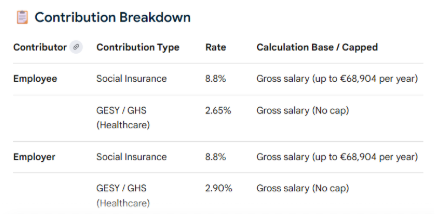
Understanding Social Insurance
Social Insurance is a system that provides financial protection during certain life events, such as illness, maternity, disability, or old age.
Both employees and employers contribute to the Social Insurance system every month.
These contributions help fund:
- Sickness benefits;
- Maternity benefits;
- Certain disability-related benefits;
- Other social protection schemes.
However, not everyone has access to all Social Insurance benefits. For example, asylum seekers and some migrant workers have limited access to certain benefits, including unemployment benefits and pensions.
Even if you may not currently qualify for all benefits, Social Insurance contributions remain mandatory for all employees.
Always check your payslip to make sure Social Insurance contributions are being deducted and paid correctly.
Understanding Income Tax
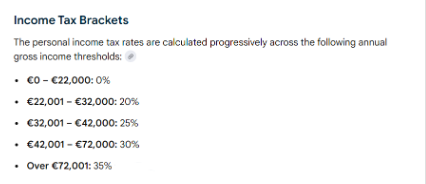
Income tax is used by governments to fund public services such as healthcare, education, roads, public administration, and social programmes.
Not everyone pays income tax.
If your annual income is below the taxable threshold, no income tax will be due. However, your employer must still report your earnings to the Tax Department.
If your income exceeds the applicable tax threshold:
- Your employer should deduct tax from your salary every month;
- The deducted amount should appear on your payslip;
- The employer should transfer the tax to the Tax Department on your behalf.
Your Responsibility
Many workers believe that tax matters are entirely the employer’s responsibility. This is not correct.
Although employers usually deduct and pay taxes, the ultimate responsibility for ensuring that the correct amount of tax has been paid belongs to the employee.
You should:
- Keep your payslips;
- Review deductions regularly;
- Check that tax payments are being made correctly;
- Submit your annual tax return (Form TD1) when required.
For the 2025 tax year, the filing deadline is 31 July 2026.
Keep Your Documents
Throughout your employment, keep copies of:
- Your employment contract;
- Payslips;
- Social Insurance registration details;
- Tax records;
- Any correspondence with your employer.
These documents may be needed if you apply for benefits, renew permits, change jobs, or need to prove your employment history.
Need Help?
Starting a new job can feel overwhelming, especially if this is your first experience of working in Cyprus.
If you have questions about your employment contract, minimum wage, Social Insurance, taxation, or your rights at work, contact Caritas Cyprus for information and guidance.
Knowing your rights is the first step towards protecting them.
This is great! Thank you.