
Emergency Preparedness in Cyprus: What to Know About SMS Alerts, Shelters and Self-Protection Measures
Authorities in Cyprus have recently introduced new guidance and tools to help residents prepare for potential emergency situations. The Ministry of Interior and Civil Defence have issued self-protection guidelines and launched a nationwide SMS alert system designed to provide rapid information and instructions if a security incident occurs.
These measures aim to ensure that residents receive timely guidance and know how to respond calmly and safely if an official warning is issued.
The New SMS Alert System
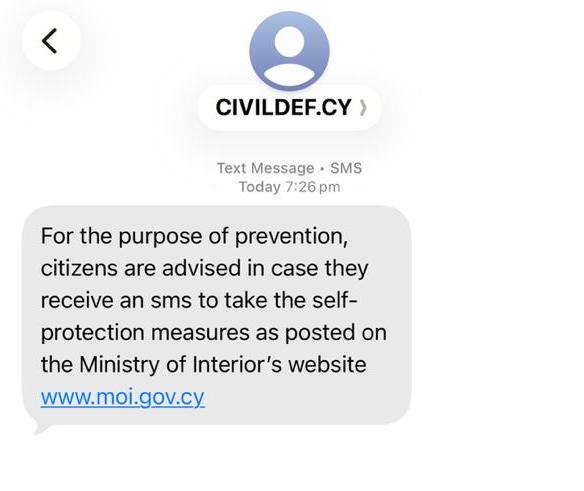
The government has introduced a mass messaging system that allows authorities to send alerts directly to mobile phones across Cyprus. This system is intended to provide immediate instructions to the public during a potential security incident and help residents take protective measures quickly.
A test message was recently sent to mobile users across the island as part of the system’s launch. The test aimed to ensure that the platform can deliver rapid warnings and instructions if needed.
If you receive an official alert message from the Ministry of Interior or Civil Defence, you should remain calm and carefully follow the instructions provided.
What to Do if You Receive an Emergency Alert
Civil Defence recommends several self-protection measures if an emergency alert is issued.
Move to a basement if possible.
If there is a basement in your home, a neighbouring building, or nearby, you should go there immediately on foot and remain calm.
Stay indoors if no basement is available.
If you are inside a building without access to a basement, remain indoors and move away from doors, windows and glass.
Seek shelter if you are outdoors.
If you are outside when an alert is issued, move immediately to the nearest indoor space.
Follow protocols in public facilities.
In places such as schools, hospitals and stadiums, trained personnel will implement established emergency procedures. Members of the public are asked not to travel by vehicle to these locations.
Limit movement until authorities give further instructions.
Residents are advised to remain in underground or indoor spaces and avoid travelling outdoors until the competent authorities issue further guidance.
Understanding Civil Defence Sirens
In urban areas, Civil Defence sirens may be used to warn residents of immediate danger. The sirens are designed to alert the population quickly and prompt protective action.
A fluctuating tone signals the start of an alert and indicates that immediate protective measures should be taken.
A steady, continuous tone signals the end of the alert, indicating that the immediate danger has passed, although residents should continue to monitor official updates.
Anyone who hears a siren should remain calm, avoid panic, and seek information from reliable sources such as radio, television, and official channels of the competent authorities.
Finding the Nearest Shelter
Civil Defence shelters are designed to protect people from blasts, debris and other hazards during emergencies and are generally intended for short stays until the immediate danger passes.
Residents are encouraged to identify the nearest shelter in advance. This can be done through:
- the SafeCY mobile application, which helps locate nearby shelters using a phone’s location or an address
- contacting the Civil Defence Operations Control Centre at 22 403 451 or 22 403 452
When moving to a shelter, residents should do so calmly and follow instructions from Civil Defence personnel or local wardens guiding people in affected areas.
Read our article : Civil Defence Reminds Public About Evacuation Shelter Protocols
What to Bring if You Need to Go to a Shelter
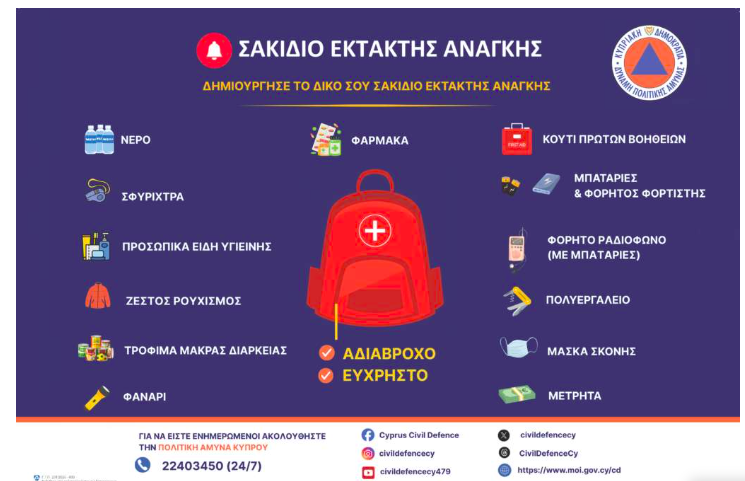
Authorities recommend preparing essential items in advance so that they can be taken quickly if sheltering becomes necessary. Recommended items include:
- identification and important documents
- a small amount of cash
- water and dry food
- baby food if needed
- first aid supplies
- essential medication
- a torch
- a small portable radio
- spare batteries
If No Shelter Is Available
If there is no shelter or designated protection area nearby, residents should identify a safe space inside their home or workplace away from windows, doors and glass.
If an alert occurs while outdoors and no immediate shelter is available, authorities advise lying face down, covering the head with the hands, and seeking cover where possible.
Staying Calm and Informed
Authorities stress that the most important actions in an emergency are to remain calm, avoid spreading rumours or unverified information, and follow official instructions from Civil Defence and other competent authorities.
Being aware of these guidelines and preparing in advance can help individuals and families respond more safely if an alert is issued.
I want to be pa of the interview
Hi,
If you want to book an appointment to be part of the research with the University of Cyprus, please contact our helplines (99601260) between 9AM and 11AM.
Thanks